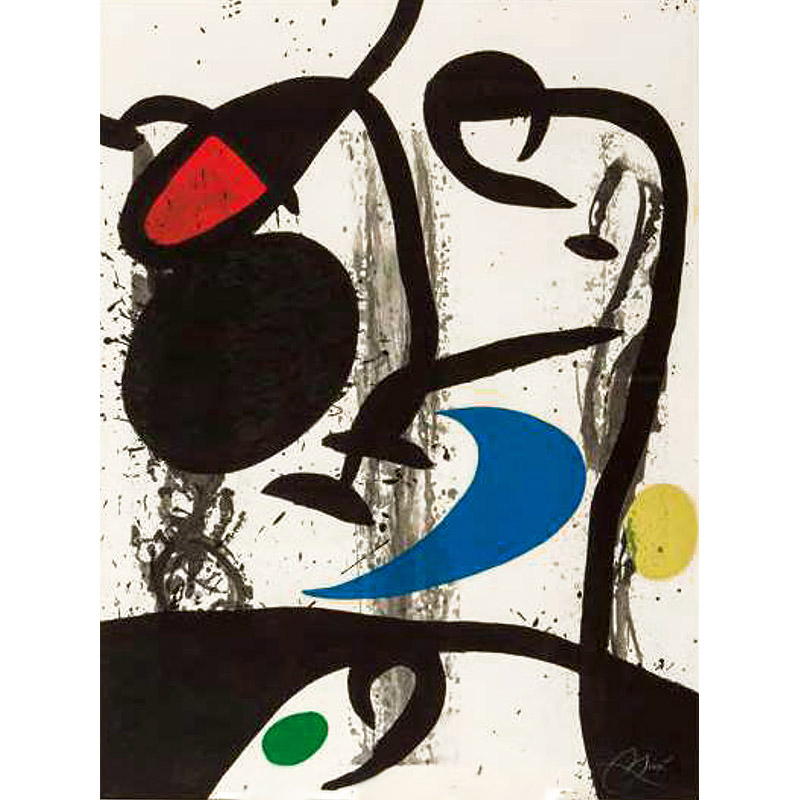
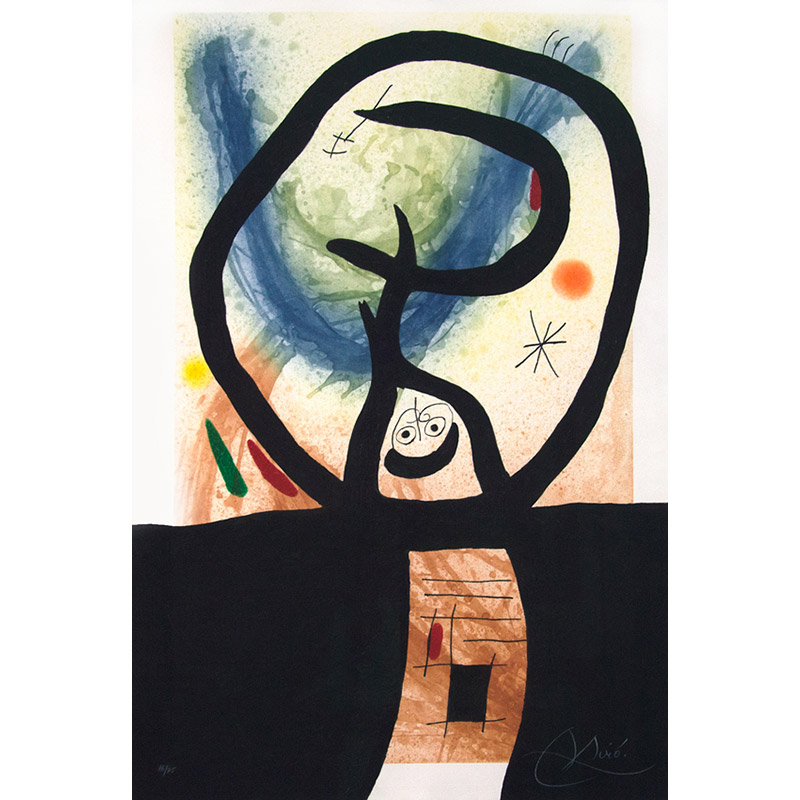
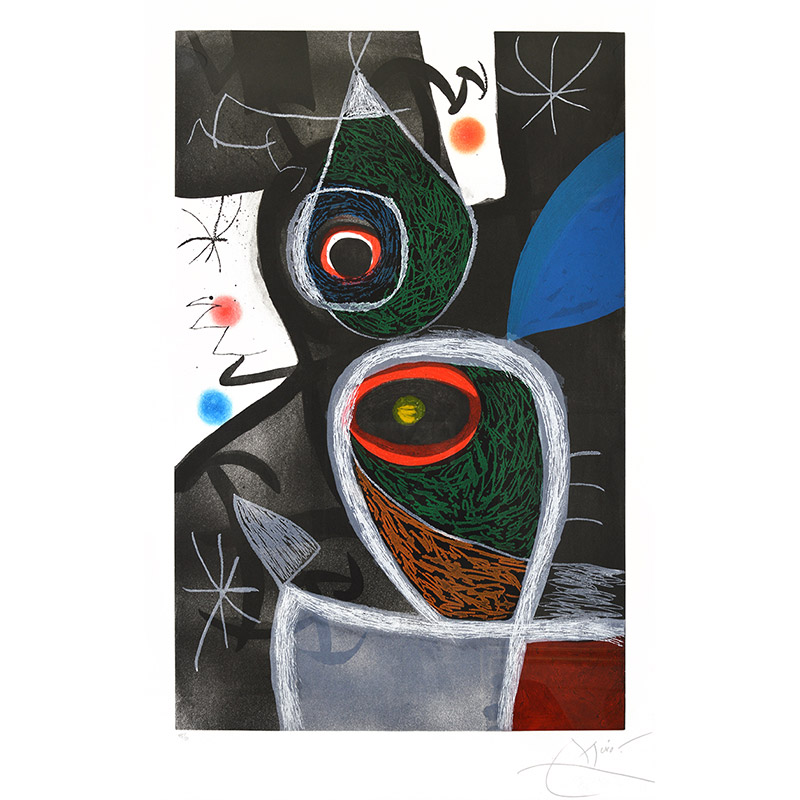
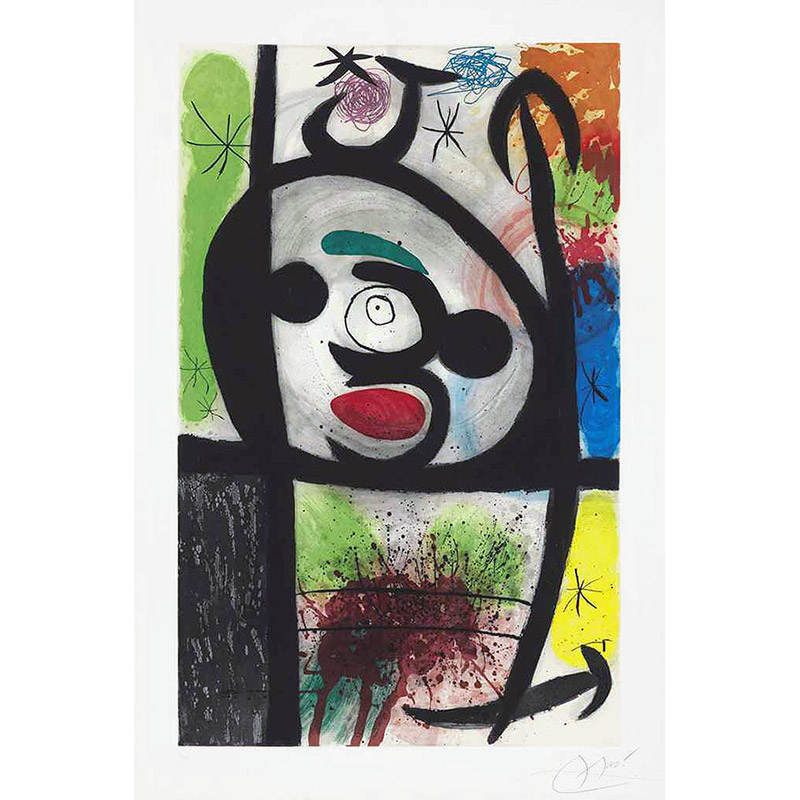
If you are trying to determine whether a Joan Miró print or lithograph is original, the first step is identifying the exact documented edition—not simply checking for a signature or edition number. Miró created thousands of graphic works, including lithographs, etchings, aquatints, drypoints, carborundum prints, illustrated books and original lithographic posters.
An original Joan Miró print should correspond with known information about the work, including its printing technique, paper, dimensions, signature or numbering, edition structure, printer, publisher and catalogue raisonné reference. These details can help distinguish an original Miró lithograph or print from a reproduction, poster or later decorative edition.
Original Joan Miró Print vs. Reproduction
An original Joan Miró print was created as a work of graphic art using a printmaking process such as lithography, etching, aquatint or carborundum. A reproduction, poster or photomechanical print may simply reproduce an existing Miró image.
The distinction can have a significant effect on both identification and market value.
A work should not be considered original solely because it carries Miró’s name, a signature or an edition number. The physical artwork should correspond with the documented specifications for the edition.
Check the Joan Miró Catalogue Raisonné
Catalogue raisonné references are among the most useful tools for identifying Miró prints.
Common references include:
- Mourlot / M. for Joan Miró lithographs
- Dupin / D. for etchings, aquatints, carborundum prints and related intaglio works
- Cramer for illustrated books, portfolios and publication projects
A catalogue entry can document the title, date, technique, dimensions, edition structure, printer, publisher and other identifying information.
A Mourlot, Dupin or Cramer number helps identify a documented work, but the catalogue number alone does not authenticate the physical print. The artwork itself should match the recorded specifications.
Check the Signature
Many Joan Miró prints were hand-signed in pencil, but not every authentic Miró print is signed.
Depending on the edition, an original work may be:
- Hand-signed
- Initialed
- Unsigned as issued
- Numbered
- Marked as an Artist’s Proof
- Marked E.A., H.C. or with another proof designation
The signature style and placement should be consistent with the documented edition.
A convincing signature does not authenticate a print if the paper, dimensions, edition or printing technique are inconsistent with the known work. Likewise, an unsigned Miró is not automatically a reproduction.
Check the Edition Number and Proof Designation
Edition information can help distinguish one version of a Miró print from another.
Look for:
- Numbered editions such as 24/75
- Artist’s Proofs
- E.A. impressions
- H.C. impressions
- Roman-numeral editions
- Printer’s or publisher’s proofs
It is important to distinguish an edition number from a catalogue raisonné number.
For example, a designation such as 27/75 identifies an individual impression within an edition, while a Mourlot or Dupin number identifies the documented work itself.
Check the Paper, Dimensions and Margins
Original Joan Miró prints were frequently printed on specific papers and within documented sheet dimensions.
When researching a Miró, compare:
- Sheet size
- Image size
- Paper type
- Watermarks, if documented
- Margins
- Printing technique
A print that differs materially from the documented dimensions or paper may warrant additional investigation.
Trimming can complicate identification because margins, edition numbers or other identifying marks may have been removed.
Identify the Printer and Publisher
Miró collaborated with important printers, workshops and publishers throughout his career.
For lithography, his work is strongly associated with Mourlot and Maeght. He also worked with specialist intaglio printers and developed increasingly experimental techniques, including carborundum, later in his career.
Printer and publisher information can be useful when identifying a Miró because it should correspond with the documented edition when known.
Signed vs. Unsigned Joan Miró Prints
An unsigned Joan Miró can still be an original print.
Miró created original lithographs for illustrated books, catalogues, portfolios and publications, including works that were not individually hand-signed. Some of these are documented original lithographs, while others encountered in the market may be posters or later reproductions.
That is why an unsigned work should be identified through its technique, paper, dimensions, catalogue reference, printer, publisher and publication history rather than dismissed solely because it lacks a signature.
Is My Joan Miró Lithograph an Original or a Poster?
A poster is not automatically a reproduction. Joan Miró created original lithographic posters for exhibitions, museums, galleries and cultural events, and some projects were issued in more than one form.
The same Miró image may exist as a signed and numbered impression before the poster lettering, an unsigned original lithographic poster, and later reproductions.
To determine which version you own, compare the printing technique, Mourlot or other catalogue reference, paper, dimensions, signature type, edition structure, printer, publisher and any poster text with the documented edition.
A printed or stone signature should also be distinguished from a hand signature added individually by Miró. These differences can have a substantial effect on both identification and market value.
Why Provenance Matters
Provenance is the documented ownership history of an artwork.
Useful provenance can include:
- Original gallery invoices
- Auction records
- Collection labels
- Exhibition history
- Estate documentation
- Publisher records
- Previous cataloguing information
Provenance does not replace physical identification, but it can support the history, ownership and marketability of a Joan Miró work.
Can Joan Miró Prints Be Professionally Authenticated?
Yes. The Fundació Joan Miró states that Successió Miró has authorized Rosa Maria Malet, a member of the Association pour la Défense de l’Oeuvre de Joan Miró (ADOM), to authenticate Joan Miró’s graphic works.
The authentication process requires direct examination of the artwork. Original Miró works outside the graphic-art category are referred to ADOM.
Professional authentication is different from preliminary identification. We can first help determine whether a print appears to correspond with a documented Miró edition and whether formal authentication may be appropriate.
What Should I Send to Identify My Joan Miró?
If you are unsure whether your Miró is an original print, reproduction or poster, send us:
- A clear photograph of the front
- A photograph of the reverse
- Close-ups of the signature
- Edition number or proof designation
- Sheet dimensions
- Any stamps or labels
- Gallery or auction documentation
- Catalogue reference, if known
Clear photographs are often enough for us to begin identifying the artwork and determining the next appropriate step.
Frequently Asked Questions About Original Joan Miró Prints
How can I tell if my Joan Miró lithograph is original?
Start by comparing the work with documented catalogue information. Important details can include the printing technique, paper, dimensions, signature, edition number, printer, publisher and Mourlot catalogue reference. No single feature should be used by itself to determine whether a Miró lithograph is original.
Does an original Joan Miró print have to be signed?
No. Many authentic Miró prints were signed and numbered, but others were issued unsigned as part of books, portfolios, publications or other documented projects. An unsigned print should be evaluated using the complete edition information rather than the absence of a signature alone.
What does a Mourlot or Dupin number mean?
A Mourlot or Dupin number is a catalogue raisonné reference used to identify a documented Joan Miró graphic work. Mourlot references are commonly associated with lithographs, while Dupin references are frequently used for etchings, aquatints, carborundum prints and related works. The number identifies the documented work, not an individual impression within the edition.
Can a Joan Miró poster be an original lithograph?
Yes. Some Joan Miró exhibition and event posters were produced using original lithography, while others are reproductions. In some cases, related signed editions without poster lettering also exist. The specific printing technique, catalogue reference, dimensions, publisher and edition information should be checked before determining exactly what type of work you own.
Have a Joan Miró You Want Identified or Valued?
If you own a Joan Miró lithograph, etching, print, portfolio or other artwork, we can help identify the specific work, review relevant catalogue information and evaluate its current market.
If the artwork is a work we are actively seeking, we may also make a confidential direct purchase offer.
Read More:
- Sell Your Joan Miró
- Sell Your Joan Miró Art: A Guide for Owners and Collectors
- How to Sell Your Joan Miró Artwork
- How Much Is My Joan Miró Worth?
- Contact Us About Selling Your Joan Miró
Sell Your Joan Miró — Request a Confidential Valuation
Send us photographs and any information you have about your Joan Miró artwork. We can help identify the work, review relevant catalogue information, evaluate its current market and determine whether it may be appropriate for a confidential direct purchase offer.