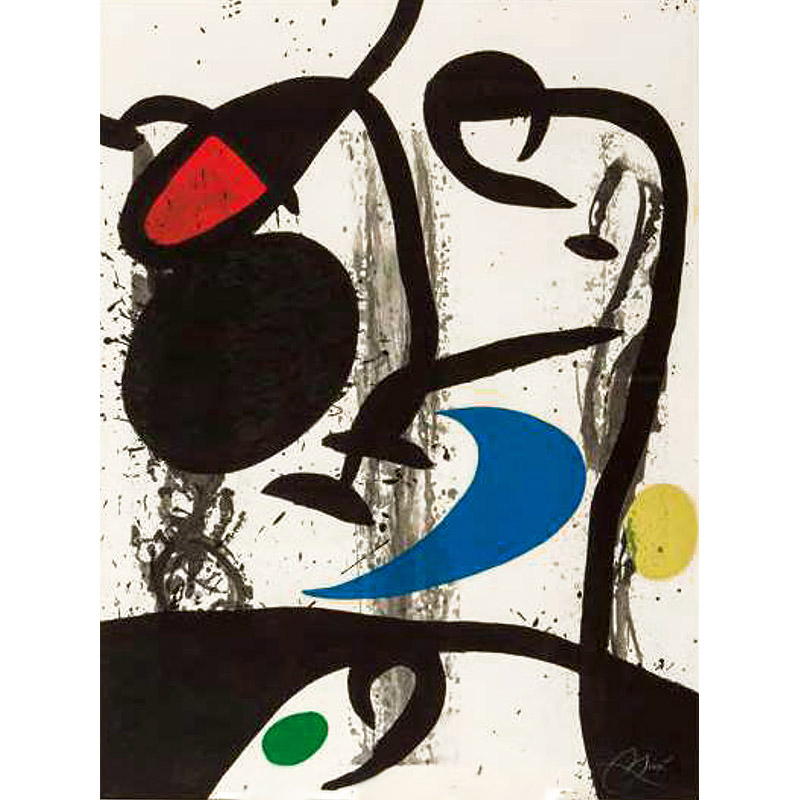
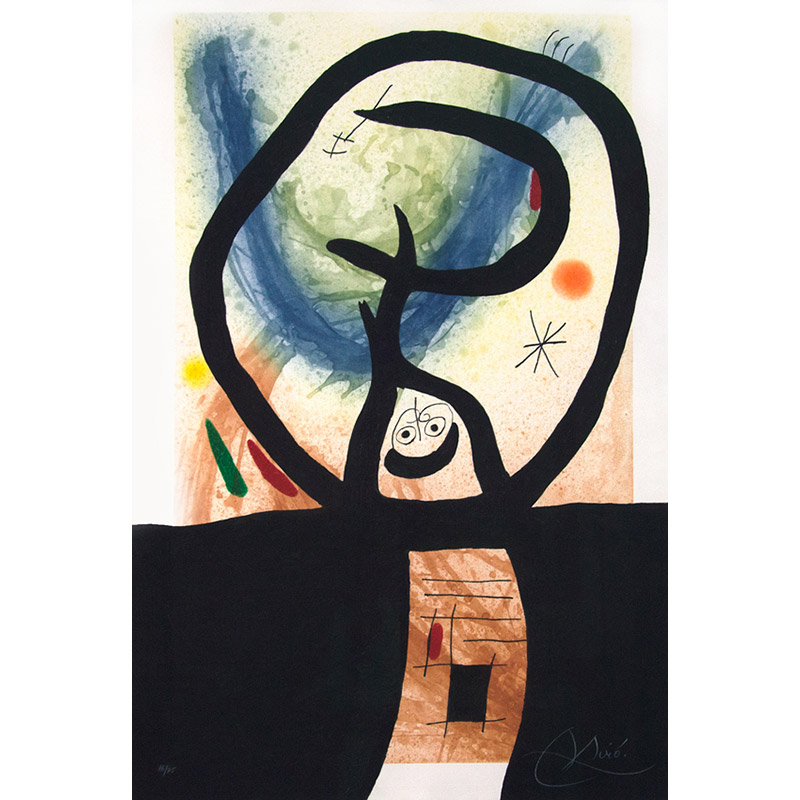
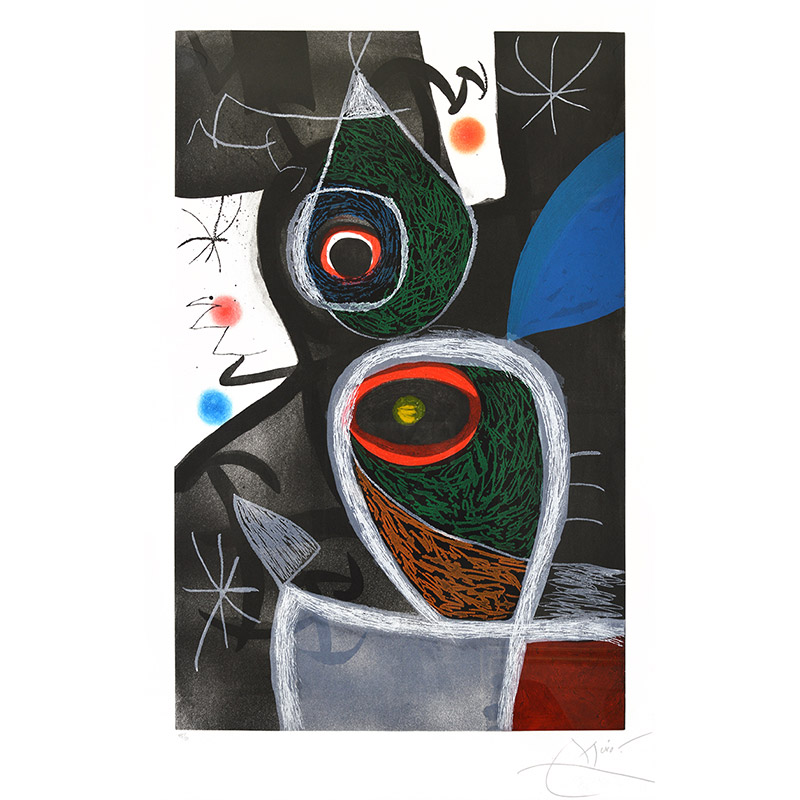
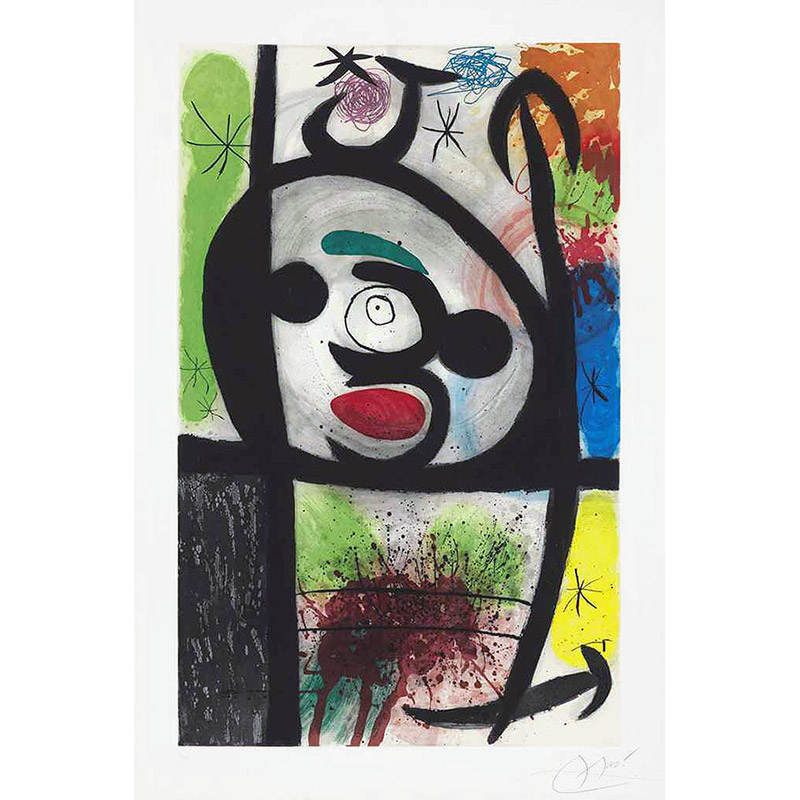
The value of a Joan Miró can vary significantly depending on exactly what you own. A signed Joan Miró lithograph, an unsigned original print, a complete portfolio, a drawing and a unique painting can each have very different market values.
If you are trying to determine what your Joan Miró is worth, the first step is to correctly identify the artwork. Medium, date, image, edition size, signature, proof type, condition, provenance, rarity and current collector demand can all affect value. For Miró prints and lithographs, catalogue raisonné references and recent sales of the same or closely comparable editions can be particularly important.
What Determines the Value of a Joan Miró?
Several factors can affect the current market value of a Joan Miró artwork.
Medium
Miró worked across painting, drawing, sculpture, ceramics and printmaking. His original prints include lithographs, etchings, aquatints, drypoints and carborundum works.
The market for each medium is different, which is why identifying whether you own an original print, painting, drawing, sculpture, ceramic or reproduction is essential before estimating value.
Image and Series
Collector demand can vary significantly by image, period, series and portfolio. Recognizable Miró imagery, strong color and works from sought-after suites may attract greater market interest than more common or less recognizable editions.
Signature
Signed Joan Miró prints generally occupy a different market from unsigned examples.
However, an unsigned Miró is not necessarily a reproduction. Miró created original lithographs for books, publications and portfolios that were issued unsigned. The exact edition should therefore be identified before determining value.
Edition Size and Proof Type
Edition size can influence rarity and collector demand.
A standard numbered edition, Artist’s Proof, E.A., H.C., printer’s proof or other documented proof type may have different market characteristics. Proof designations should always be compared with the catalogue information for the specific work.
Condition
Condition can materially affect value, especially for works on paper.
Fading, foxing, staining, toning, creases, tears, trimming, tape residue, mounting and restoration can all influence marketability and price. For Miró’s colorful graphic works, preservation of the original color can be especially important.
Provenance and Documentation
Gallery invoices, auction records, collection history, exhibition labels, catalogue references and other documentation can help establish the ownership history and marketability of a Joan Miró artwork.
How Much Is a Joan Miró Print or Lithograph Worth?
The value of a Joan Miró print or lithograph depends on much more than the artist’s name. Two impressions using similar imagery can have substantially different values depending on the exact edition and how the work was issued.
Important factors include:
- Exact image or series
- Lithograph, etching, aquatint or other printmaking technique
- Edition size
- Signed or unsigned status
- Artist’s Proof or other proof designation
- Dimensions
- Condition and color
- Provenance
- Catalogue raisonné reference
- Current collector demand
Signed and numbered editions, rare proofs, desirable images and complete suites can trade very differently from unsigned publication lithographs, posters or later reproductions.
The most useful valuation evidence is usually recent sales of the same work or closely comparable editions rather than broad averages for Joan Miró prints as a whole.
Signed vs. Unsigned Joan Miró Prints
A pencil-signed and numbered Joan Miró lithograph or etching will generally occupy a different market from an unsigned example.
That does not mean an unsigned work has no value.
Miró created many original lithographs for books, catalogues, portfolios and publications. Some unsigned works are genuine original prints, while others encountered in the market may be posters or later reproductions.
Correct identification is therefore essential before estimating value.
How Complete Joan Miró Suites and Portfolios Affect Value
Complete print suites and portfolios can have different market dynamics from individual works removed from the same set.
Collectors may place greater value on complete groups when:
- All works are present
- Edition numbers correspond
- Condition is consistent
- Original portfolio materials remain
- Provenance is documented
An individual print from a desirable portfolio can still have meaningful value, but a complete suite may attract a different level of collector interest.
How Condition Affects Joan Miró Value
Condition can materially affect the value of a Joan Miró print or work on paper.
Common issues include:
- Fading
- Foxing
- Staining
- Toning or discoloration
- Creasing
- Tears
- Trimmed margins
- Tape residue
- Previous mounting
- Restoration
Condition should be evaluated in the context of the specific work. A rare or highly desirable print may remain valuable despite imperfections, while condition problems can have a greater effect on more commonly available editions.
Joan Miró Catalogue Raisonné References
Catalogue raisonné references can be particularly useful when identifying and valuing Joan Miró prints.
Common references include works catalogued by:
- Jacques Dupin
- Fernand Mourlot
- Patrick Cramer
These references can help confirm details such as:
- Title
- Date
- Medium
- Dimensions
- Edition size
- Printer
- Publisher
- Signature or numbering information
Correctly matching the physical artwork with the documented edition is an important part of establishing a meaningful valuation.
Why Provenance Matters
Provenance is the documented ownership history of an artwork.
Helpful provenance may include:
- Gallery invoices
- Auction records
- Collection history
- Estate documentation
- Exhibition history
- Publisher information
- Catalogue raisonné references
- Previous appraisals
Strong provenance can reduce uncertainty for buyers and help establish a clearer ownership history.
Recent Auction Results and Comparable Sales
Auction results are useful when valuing a Joan Miró, but broad averages can be misleading.
The most relevant comparison is usually the same work or a closely related edition with similar:
- Signature status
- Edition size
- Dimensions
- Condition
- Provenance
- Sale date
Public auction results are only part of the picture. Current private-market activity, availability of other examples and present collector demand can also influence what a specific Miró may realistically be worth.
Does Authenticity Affect Joan Miró Value?
Before estimating value, it is essential to determine whether you own an original Joan Miró print, an original lithographic poster, an unsigned publication lithograph or a reproduction. Works using the same Miró image can occupy very different markets.
Identification may involve the printing technique, paper, dimensions, signature, edition number, printer, publisher, catalogue raisonné reference and provenance.
For a complete identification guide, see our How to Tell If Your Joan Miró Is an Original Print guide.
How Can I Get My Joan Miró Valued?
To begin evaluating your Joan Miró, send:
- A clear photograph of the front
- A photograph of the reverse
- Close-ups of the signature
- Edition number or proof designation
- Dimensions
- Any labels or stamps
- Purchase records or provenance
- Catalogue reference, if known
- Any known condition issues
You do not need to have every detail before contacting us. Clear photographs are often enough for us to begin identifying the artwork and researching relevant comparable sales.
Frequently Asked Questions About Joan Miró Value
Are signed Joan Miró prints worth more than unsigned prints?
Signed and numbered Joan Miró prints generally occupy a different market from unsigned impressions, but an unsigned Miró is not necessarily a reproduction. Some authentic original lithographs were issued unsigned in books and publications. The exact edition, image, condition and provenance should be identified before estimating value.
Are Joan Miró lithographs valuable?
Original Joan Miró lithographs can have significant collector value, but prices vary widely by image, edition size, signature, condition, provenance, rarity and current demand. A signed limited-edition lithograph and an unsigned publication lithograph using similar imagery can have very different market values.
Does the condition of a Joan Miró affect its value?
Yes. Fading, foxing, staining, trimming, creasing, tears, mounting and restoration can all affect market value. For Miró’s colorful prints, preservation of the original color can be particularly important.
How do I get a Joan Miró valuation?
Start by providing clear photographs of the front and back of the artwork, along with the signature, edition number, dimensions and any labels or documentation. Once the exact work has been identified, relevant comparable sales, condition, provenance and current market demand can be reviewed to estimate its present market value.
Sell Your Joan Miró
If you are considering selling a Joan Miró print, lithograph, painting, drawing, sculpture, ceramic or complete portfolio, we can help identify the exact artwork, evaluate its current market value and determine whether it may be a work we are interested in purchasing directly.
For works we are actively seeking, we may provide a confidential direct purchase offer based on the specific artwork, condition, provenance and current market demand.
Read More:
- Sell Your Joan Miró
- Sell Your Joan Miró Art: A Guide for Owners and Collectors
- How to Sell Your Joan Miró Artwork
- How to Tell If Your Joan Miró Is an Original Print
- Contact Us About Selling Your Joan Miró
Sell Your Joan Miró — Request a Confidential Valuation
Send us photographs and any information you have about your Joan Miró artwork. We can help identify the work, evaluate its current market value and determine whether it may be appropriate for a confidential direct purchase offer.